Short answer: most of the time, water is enough. If you are going about a normal day, eating regular meals and doing a 30 to 45 minute workout, plain water covers you. Electrolytes start to matter when you sweat a lot, spend hours in the heat, have a long active day or are bouncing back from a stomach bug.
That is probably not what you expected from a brand that makes an electrolyte drink. But it is the honest answer, and knowing when electrolytes actually help is more useful than drinking them for the sake of it.
What is the difference between electrolytes and water?
Water is, well, water. It is the base of everything: your blood, your cells, the sweat that cools you down. You need it every day, no matter how active you are.
Electrolytes are minerals that carry an electrical charge once they are dissolved in fluid. The main ones are sodium, potassium, magnesium, calcium and chloride. In the body, they help manage fluid balance, nerve signals and muscle contractions. You get them mostly from food: bread, cheese, vegetables, fruit, nuts, a pinch of salt on your pasta.
So it is not really "electrolytes or water". Electrolytes work together with water. The real question is whether, on a given day, your food and water are enough, or whether you have lost enough through sweat that topping up makes sense.
What does sweat actually contain?
Sweat is mostly water. The rest is a mix of minerals, and the biggest one by far is sodium (together with chloride, which is why sweat tastes salty). There are smaller amounts of potassium and only very small amounts of magnesium and calcium.
How much you lose varies a lot from person to person. Some people barely sweat during a run; others finish a padel match dripping, with white salt marks on their cap or shirt. Heat, humidity, intensity, fitness and genetics all play a role. That is why there is no single rule that fits everyone.
The practical takeaway: if you are replacing what you lose in sweat, sodium is the priority, followed by fluid itself.
When is water enough?
For most people, on most days, water does the job. That includes:
- Normal days at the office, at school or at home
- Walks, light cycling, yoga or stretching
- Gym sessions or runs of up to about an hour in mild weather
- Days when you eat regular meals, which already bring a good amount of sodium and potassium
A useful reference: EFSA (the European Food Safety Authority) recommends an adequate total water intake of about 2.0 L a day for women and 2.5 L for men, including the water that comes from food. If you want to dig into that, we wrote a full guide on how much water you should drink a day.
When do electrolytes actually help?
Electrolytes become useful when your losses go beyond what a normal meal and a few glasses of water can easily cover. Typical situations:
Long or sweaty sessions
Think runs or rides longer than an hour, a full padel tournament, a long hike, or any session where you finish soaked. The more you sweat, the more sodium you lose along with the water.
Hot weather
Summer in Belgium is not the Sahara, but on a warm, humid day you can sweat a surprising amount even without training. Add a bike commute or a festival day and your needs go up.
Long active days
Moving house, a day of surfing, gardening in the sun, a city trip on foot. Not "sport", but hours of steady effort and sweating.
Recovering from illness
Vomiting, diarrhoea or fever can make you lose fluid and electrolytes quickly. In those cases, oral rehydration solutions from the pharmacy are designed for exactly that job. Ask your doctor or pharmacist for advice, especially for young children, older people or if symptoms last.
Signs you may need more than water
Your body gives hints, but they are not a diagnosis. Some signs that your fluid or salt balance might be off after a lot of sweating:
- You drank plenty of water but still feel flat, light-headed or "off"
- White, salty marks on your clothes or skin after training
- Very dark urine, or the opposite: drinking huge amounts of plain water and urinating constantly during long efforts
- Headache after a long, hot day outdoors
- Muscle twitchiness during very long sessions (cramps have many causes, so this is not proof of anything)
These can have lots of different causes. If symptoms are strong, keep coming back or you feel confused or very unwell, stop and get medical help. And if you have a medical condition such as high blood pressure, heart or kidney issues, or you are pregnant, talk to your doctor before adding extra sodium to your routine.
Water vs electrolyte drink vs classic sports drink
Here is a simple way to compare the three options most people choose between:
| Water | Low-sugar electrolyte drink | Classic sugary sports drink | |
|---|---|---|---|
| Electrolytes | Very few (depends on the water) | Moderate amounts of sodium, potassium, magnesium | Usually sodium, sometimes potassium |
| Sugar | None | Little or none | Usually quite a lot |
| Calories | Zero | Very low | Noticeable |
| Best for | Every day, all day | Daily use, warm days, sweaty sessions of moderate length | Long, hard efforts where you also need fuel |
| Watch out for | Not enough on its own after very heavy sweating | May not cover very heavy sodium losses on its own | Easy to drink a lot of sugar on a normal day |
The sugar in classic sports drinks is not a bad thing in itself. During a marathon or a long, intense ride, those carbohydrates are fuel. The problem is that many people drink them on the couch or after a short gym session, where the sugar is not needed.
Where Maverick fits in
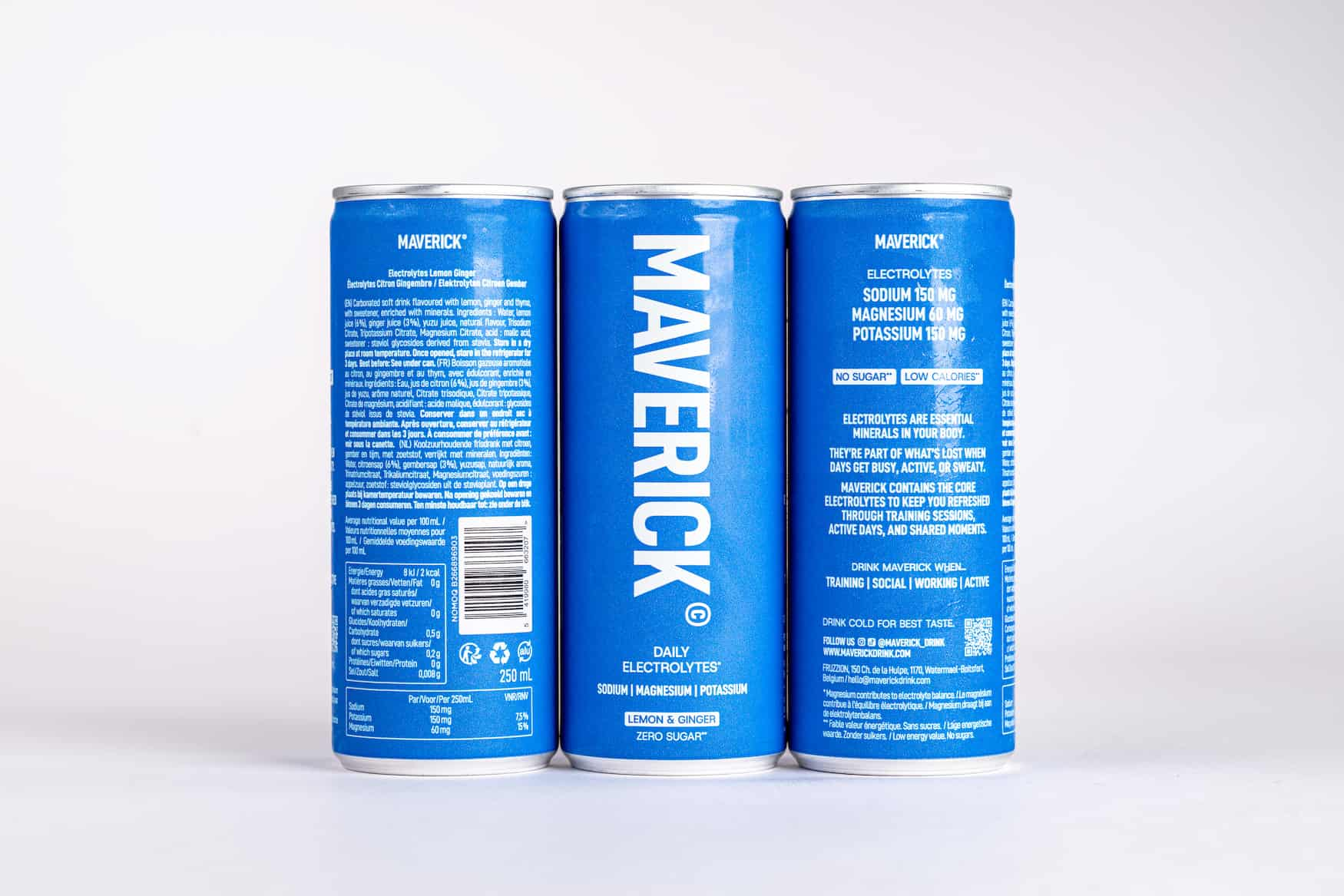
We built Maverick as a Daily Electrolytes drink: something you can reach for on a normal active day without loading up on sugar. One 250 ml can contains 150 mg sodium, 150 mg potassium and 60 mg magnesium, with 5 kcal and no added sugar. Magnesium contributes to electrolyte balance and to normal muscle function. You can read more about what is inside on our electrolytes page.
To be clear about what it is not: Maverick is not a replacement for water, and it is not designed for extreme efforts. If you are running a marathon, riding for hours in the heat or you are a very heavy sweater, you will likely need more sodium (and some carbohydrates) than one can provides. For everything in between, like a sweaty padel session, a warm afternoon or a long day on your feet, it is a nice middle ground between plain water and a sugary sports drink. If that sounds like your kind of day, you can find it in our shop.
A simple way to decide
- Start with water. Keep a bottle with you and sip through the day.
- Eat normally. Regular meals cover most of your electrolyte needs.
- Add electrolytes when you sweat a lot: long sessions, heat, long active days.
- Choose sugar based on effort. Low or no sugar for daily use, carbohydrates when you need fuel for long, hard efforts.
- Get advice when you are ill or have a medical condition.
You do not need to overthink this. Drink water, listen to your body, and add electrolytes on the days you actually sweat for them. Small habits, repeated often, are what keep you moving, whether that is your first 5 km or your hundredth Sunday ride.