To stay hydrated in hot weather, drink small amounts regularly through the day before you feel thirsty, and replace salt as well as water when you sweat a lot. Add water-rich food, shift exercise to the cooler hours and keep an eye on alcohol. And know the warning signs of heat exhaustion, so you can act early.
Belgian summers used to mean a few warm days and a lot of grey. That has changed. Heatwaves now show up most summers, and they tend to land right when you have a festival ticket, a long ride planned or a padel match at 6 pm on a terrace that has been baking all afternoon. Here is what actually helps.
Why hot weather dehydrates you faster
Your body cools itself mainly by sweating. When sweat evaporates from your skin, it takes heat with it. The hotter it is, and the harder you move, the more you sweat. On a humid day, sweat evaporates less well, so you keep sweating without cooling down as much.
Sweat is not just water. It also contains electrolytes, mostly sodium, with smaller amounts of potassium and magnesium. How much salt you lose varies a lot from person to person: some people finish a summer ride with white salt marks on their shirt, others barely show any.
Thirst also lags behind, so by the time you feel it in the heat, you are often already a little short. Drink before you need to.
How much should you drink when it's hot?
As a starting point, EFSA (the European Food Safety Authority) recommends an adequate total water intake of about 2.0 L a day for women and 2.5 L for men, including water from food. That figure is for normal conditions. In the heat, and especially when you are active, you need more on top of that.
Rather than chasing an exact number, use these practical checks:
- Urine colour: pale yellow is the goal. Dark yellow means drink more. Completely clear all day can mean you are overdoing plain water.
- Little and often: a glass every hour or so beats downing a litre at once, which mostly sends you to the toilet.
- Weigh yourself around long workouts: noticeably lighter after a hot ride means fluid to replace, slowly, over the next hours.
People with heart or kidney conditions, people on medication that affects fluid balance, and pregnant women should talk to their doctor about how much to drink in a heatwave, since the general advice may not fit them.
Water or electrolytes: what to drink in a heatwave
For most people on an ordinary hot day, water and regular meals cover it. Food naturally contains salt, and your body is good at balancing things out.
Electrolytes start to matter more when you sweat a lot for a long time: a two-hour ride in 30°C, a full day dancing in a field, an afternoon of padel tournaments, or a hike in the south of Spain. In those situations, drinking only plain water replaces the fluid but not the sodium. Drinking huge amounts of plain water without any salt during long, sweaty efforts can even dilute the sodium in your blood, which is rare but serious. We go deeper into this in electrolytes vs water.
| Situation | What usually works |
|---|---|
| Hot day at work or at home | Water through the day, normal meals |
| Padel or a run under an hour | Water before and after, a few sips during |
| Long ride or hike, 2h+ in the heat | Water plus electrolytes, salty snacks, regular food |
| Festival day | Water all day, electrolytes when you sweat a lot, real meals |
| Travel to a hot country | Extra water from day one, salty food, give yourself time to adapt |
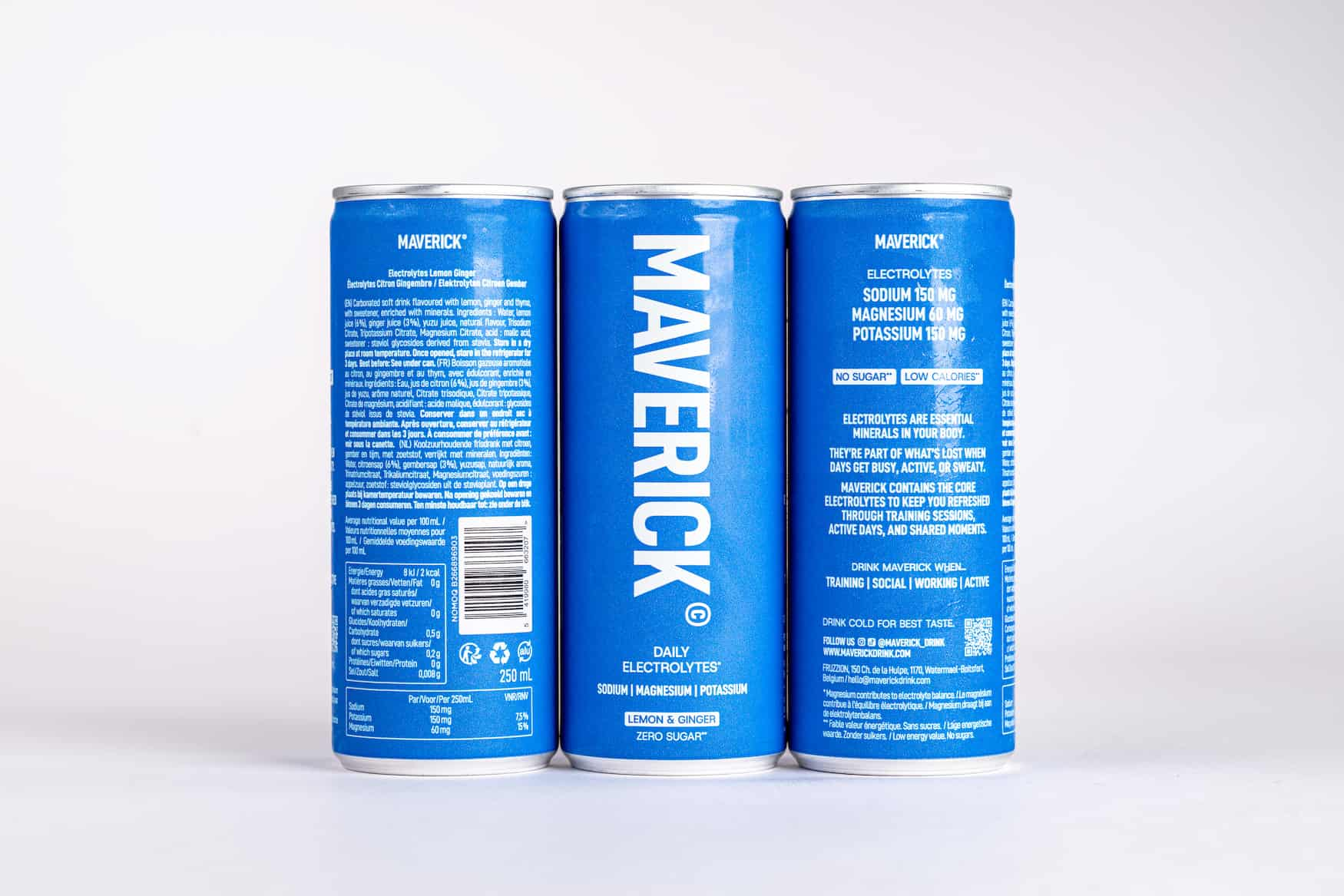
Maverick has 150 mg sodium, 150 mg potassium and 60 mg magnesium per can, with 0 g added sugar. Magnesium contributes to electrolyte balance and normal muscle function. To be honest about it: one can will not replace all the salt you lose on an extreme day. If you are a heavy sweater doing hours in the heat, you will need more sodium than that, from salty food or a stronger sports formula. You can read more about how electrolytes work here.
Eat your water too
A good part of your daily water comes from food, and summer makes that easy. Watermelon, cucumber, tomatoes, strawberries, peaches, lettuce and courgette are all mostly water.
Salty foods help on long, sweaty days. Think olives, a handful of salted nuts, crackers, a cheese sandwich or a bowl of soup. In the heat, appetite often drops, but skipping meals means skipping a big part of your salt and fluid intake.
Exercising in the heat: cycling, running and padel
Pick your hour
The hottest part of the day in Belgium is usually mid-afternoon. Go early in the morning or later in the evening when the sun is low. A 7 am ride on a heatwave day can feel completely normal; the same route at 3 pm is a different sport.
Slow down on purpose
Your heart rate climbs faster in the heat, so the same pace costs more. Drop the intensity, shorten the session or add more breaks in the shade. It is not a step back, it is common sense.
Drink before, during and after
Start your session already hydrated, with a glass or two in the hour before. Take small sips during, every 15 to 20 minutes on longer efforts. Afterwards, keep drinking over the next few hours and eat something with salt in it. For padel, keep a bottle at the side of the court and drink at every change of ends.
Festivals, alcohol and summer travel
A summer festival in Belgium can mean ten hours on your feet, in the sun, with dancing, beer and not much shade.
- Bring a refillable bottle and use the free water points. Most big festivals have them.
- Alternate drinks: one alcoholic drink, one glass of water. Alcohol makes you pee more and makes it harder to notice how you feel.
- Eat proper meals, not just fries at 1 am. You need the salt and the energy.
- Find shade during the hottest hours, wear a cap and use sunscreen.
- Look out for your friends. People often notice heat trouble in someone else before they notice it in themselves.
Travelling somewhere hot works the same way. Your body needs roughly a week or two to get used to heat, so drink more from the moment you land and do not plan your biggest hike for day one.
Warning signs of heat exhaustion and when to get help
Public-health services describe two main heat problems. Heat exhaustion is the more common one. Signs can include:
- heavy sweating, pale and clammy skin
- dizziness, headache, nausea
- muscle cramps
- weakness, unusual tiredness
- a fast pulse, intense thirst
If you or someone else shows these signs, stop, move to a cool or shaded place, lie down with the legs slightly raised, loosen tight clothing, cool the skin with water and a fan, and sip water or an electrolyte drink. Most people feel better within 30 minutes.
Heatstroke is a medical emergency. Be alert for confusion, strange behaviour, slurred speech, fainting, a seizure, or very hot skin that may stop sweating. In Belgium, call 112 straight away, and cool the person down while you wait. Also call for help if heat exhaustion symptoms do not improve after about 30 minutes. Babies, older people and people with chronic illness are more at risk, so check on them during a heatwave.
Your hot weather hydration checklist
- Start the day with a glass of water.
- Keep a bottle with you and sip every hour.
- Check your urine: pale yellow is the target.
- Eat water-rich fruit and vegetables at every meal.
- Add salt or electrolytes on long, sweaty days.
- Train early or late, slower than usual.
- One water for every alcoholic drink.
- Wear a cap, find shade, use sunscreen.
- Know the signs of heat exhaustion, and call 112 for heatstroke.
If you want something light to keep in the fridge for those days, a 12-pack of Maverick is in our shop. But the real point is the habit, whatever is in your bottle.
Hot days are some of the best days of the year to be outside. A bit of planning means you get to enjoy them: the early ride, the evening match, the last set at the festival. Drink a little more than you think, slow down when the sun is high, and look after the people around you.