Coconut water can be a good drink for light hydration, but it is not a complete electrolyte drink for heavy sweating. It is naturally rich in potassium, yet usually low in sodium, which is the main electrolyte you lose when you sweat. It also brings natural sugars and calories, and the exact content varies a lot from one carton to the next.
Picture it: a sunny afternoon on the beach, a surfboard under your arm, a cold coconut water in your hand. It feels like the most natural recovery drink in the world. And sometimes it is a perfectly fine choice. So let's look at what is actually in it, when it works well, and when you might want something else.
What is actually in coconut water?
Coconut water is the clear liquid inside young green coconuts. It is not the same as coconut milk, which is made from the white flesh and is much richer in fat. Coconut water is light, slightly sweet and mostly, well, water.
In terms of what matters for hydration, here is the general picture:
- Potassium: this is where coconut water shines. It is naturally rich in potassium, more than most other drinks.
- Sodium: usually relatively low. Some products contain a bit more, many contain very little.
- Magnesium and calcium: present in small amounts.
- Natural sugars: even without added sugar, coconut water contains naturally occurring sugars, which also means calories.
One important detail: coconut water is a natural product, so its composition depends on the coconut, its maturity, where it was grown and how it was processed. On top of that, some brands add sugar, fruit juice or flavourings. Two cartons on the same shelf can be quite different. That is why we prefer to describe it in general terms here and encourage you to check the nutrition label of the one you actually buy. If you want a quick refresher on how to do that, our guide on how to read a sports drink label walks you through it.
Coconut water electrolytes vs what you lose in sweat
This is the key point most people miss. When you sweat, the electrolyte you lose in the largest amount is sodium. You also lose some potassium, and smaller amounts of magnesium and calcium, but sodium is the main one. How much depends on the person: some people are salty sweaters (you will see white marks on your cap or shirt), others lose much less.
Coconut water has the opposite profile: lots of potassium, little sodium. So it does not really mirror what leaves your body during a sweaty session. That does not make it a bad drink. It just means it is better at some jobs than others.
If you want to understand why sodium matters so much, and what each electrolyte does in the body in general, our page on electrolytes explains the basics without the jargon.
Coconut water vs water vs sports drinks: a simple comparison
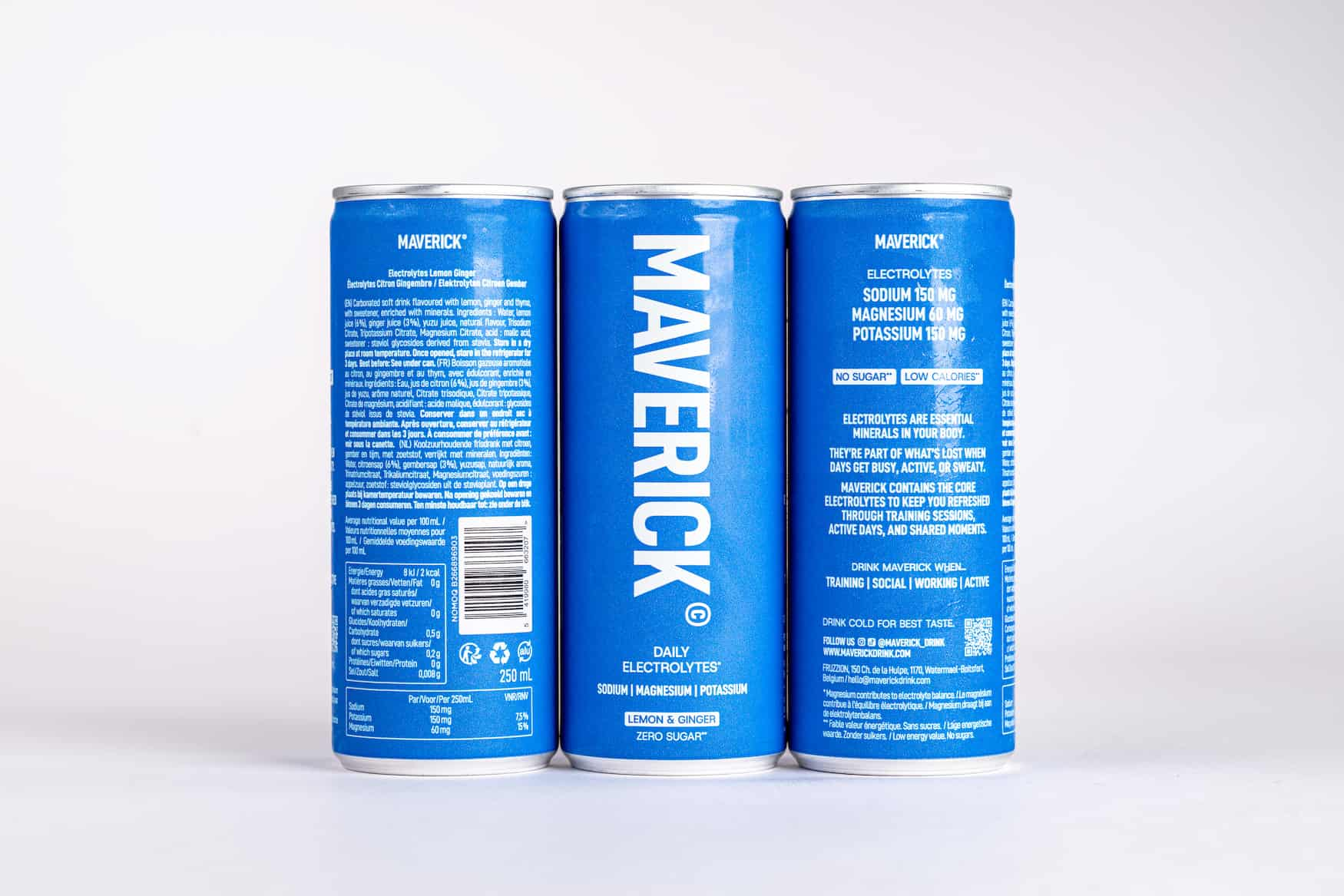
Here is how coconut water compares to plain water, a classic sports drink and our own can. For the first three, values vary between products, so we use general terms. For ours, we give the exact figures per 250 ml.
| Water | Coconut water | Classic sports drink | Maverick (per 250 ml can) | |
|---|---|---|---|---|
| Sodium | Very low | Low (varies) | Moderate | 150 mg |
| Potassium | Very low | High | Low to moderate | 150 mg |
| Magnesium | Varies with the water | Low | Low or none | 60 mg |
| Sugar | None | Natural sugars (varies) | Usually high | 0 g added sugar (0.5 g natural) |
| Calories | None | Moderate | Moderate to high | 5 kcal |
| Taste | Neutral | Sweet, nutty, love it or hate it | Sweet, often fruity | Lemon & Ginger with yuzu, lightly sparkling |
What stands out: none of these is "the best" for everything. Water is the foundation and should stay your main drink. Classic sports drinks bring sugar for fuel during long efforts, which is useful in some situations and unnecessary in many others. Coconut water sits somewhere in between, with a natural image but its own sugars. Our drink was made as a daily electrolyte drink: sodium, potassium and magnesium in a balanced, moderate dose, with almost no sugar.
When coconut water is a nice choice
Let's be fair: coconut water has real qualities. It can be a great pick when:
- You simply like the taste. If it helps you drink more during the day, that is already a win.
- You want something lighter than juice or soda. Compared to many sweet drinks, unsweetened coconut water is often a lighter option.
- You did a short or easy workout. A 30 to 45 minute walk, an easy ride or a relaxed yoga session usually does not cause huge sweat losses. Coconut water is fine here.
- You are relaxing on a hot day. Sipping something cold and natural on a terrace or at the beach is a pleasure, and pleasure counts.
In these casual moments, the low sodium is not much of an issue, because you are not losing that much in the first place.
When coconut water is not ideal
Coconut water is less suited when sodium losses are big. Think about:
- Long sessions: a long run, a big bike ride, a hike that lasts most of the day.
- Heat and humidity: training in summer or in a warm gym where you are dripping.
- Heavy or salty sweaters: if you often finish with salt marks on your clothes.
- Several sessions in a row: a padel tournament, a training camp, back to back matches.
In these situations, you generally want a drink with more sodium, and often some carbohydrates and real food as well. Drinking a lot of coconut water to compensate also means drinking a fair amount of sugar and calories, which is not always what you want.
Honesty applies to us too: one of our cans will not cover a marathon in the heat either. For very long, very hot or very sweaty efforts, many people need more sodium than a single can gives. Maverick is made for everyday active life, not as a replacement for water, food or a proper race-day strategy.
And a general note: if you have a medical condition, follow a low-sodium or low-potassium diet, have kidney or blood pressure issues, or are pregnant, talk to your doctor before changing your drinking habits or adding electrolyte drinks.
A homemade option: water, salt and citrus
You do not always need to buy anything. A very simple homemade electrolyte drink is a bottle of water with a small pinch of salt and a squeeze of lemon or orange. Some people add a little honey if they want some sugar during a long effort.
The honest pros and cons:
- Pros: cheap, quick, and you know exactly what is in it.
- Cons: hard to dose precisely, easy to make it too salty, and the taste can be a bit flat.
Keep it light: the goal is a drink that tastes very slightly salty, not seawater. You can also mix a bit of coconut water with plain water and a pinch of salt, which balances its profile somewhat.
So, is coconut water good for hydration?
Yes, in the right context. It hydrates, it tastes good to many people, and it brings a nice dose of potassium. But it is not a magic recovery drink, it usually lacks sodium for sweaty sessions, and it is not sugar free. Look at the label, think about how much you actually sweat, and choose accordingly.
If you are looking for something you can drink every day, with electrolytes and almost no sugar, you can try Maverick Daily Electrolytes and see how it fits your routine.
Whatever is in your bottle, the most important part is that you keep moving and keep drinking. Coconut water on the beach after a surf, water during your run, something salty after a long ride: small, smart choices that make an active life feel good, one step at a time.