Magnesium does play a real role in tiredness: the European Food Safety Authority (EFSA) assessed the evidence, and the EU has authorised the claim that magnesium contributes to the reduction of tiredness and fatigue. But that does not make it a magic fix. If you are short on magnesium, getting enough can help; if your tiredness comes from bad sleep, stress or something medical, magnesium will not solve it.
Let's look at what that claim really means, how much magnesium you need, where to find it on your plate, and when feeling tired is a reason to see a doctor rather than buy a supplement.
Does magnesium help with tiredness?
Magnesium is a mineral your body uses in hundreds of processes. It is involved in turning food into usable energy, in how your muscles contract and relax, and in how nerve signals travel. It is also one of the electrolytes, alongside sodium, potassium, calcium and chloride. If you want the bigger picture, we explain the whole family in what are electrolytes.
Because magnesium is so involved in energy metabolism, it makes sense that a low intake could leave you feeling flat. That is exactly what the EU authorised claim reflects. What it does not say is that taking more and more magnesium will give you more and more energy. Once your needs are covered, extra magnesium does not turn into extra energy.
What an "authorised health claim" means, in plain words
In the EU, a food or drink is not allowed to say whatever it wants about your health. Every health claim has to be checked first. EFSA, the independent scientific body, reviews the research. If the evidence holds up, the European Commission adds the claim to an official list, with the exact wording that companies must use.
For magnesium, the authorised claims include:
- Magnesium contributes to the reduction of tiredness and fatigue.
- Magnesium contributes to electrolyte balance.
- Magnesium contributes to normal muscle function.
- Magnesium contributes to normal energy-yielding metabolism.
A few things are worth knowing about how to read these:
- "Contributes to" means magnesium is one of the pieces in the puzzle, not the whole puzzle.
- A product can only use the claim if it contains a meaningful amount of magnesium, set by EU rules.
- The claim describes what magnesium does in a healthy body. It is not a promise about any product and it is not a treatment for a medical condition.
So when you see "contributes to the reduction of tiredness and fatigue" on a label, it is a legally checked statement, but a modest one. It is honest science, not a miracle.
Why am I always tired? The usual suspects
Before blaming magnesium, it helps to look at the bigger list. Tiredness is one of the most common things people mention to their doctor, and the causes are varied:
- Sleep: too little, irregular hours, a late screen habit or a noisy room.
- Stress and mental load: work, family, money worries. They drain you even on a "lazy" day.
- Low iron: very common, especially in people who menstruate, and a classic cause of fatigue.
- Illness or recovery: a lingering cold, a virus, or something your body is still fighting.
- Not eating or drinking enough: skipped meals, long gaps, or simply not drinking much water during the day.
- Training load: a big week of running or cycling without enough rest or food.
- Other medical causes: thyroid problems, low vitamin B12 or vitamin D, mood changes, and more.
Magnesium sits somewhere on this list, but rarely at the top. If you have been tired for weeks, if it gets in the way of daily life, or if it comes with other symptoms like weight changes, breathlessness or feeling low, please talk to a doctor. A simple blood test can rule out common causes like low iron. That is a much better first step than guessing with supplements.
How much magnesium do you need per day?
The EU reference intake used on food labels, called the NRV (nutrient reference value), is 375 mg of magnesium a day for adults. When a label says a product gives you "15% NRV" of magnesium, it is calculated from that 375 mg.
Real needs vary a little depending on age, sex, pregnancy and breastfeeding, but 375 mg is a useful everyday benchmark. Most people in good health who eat a varied diet get a good part of it from food. Intake can end up on the low side if your diet is heavy on refined, processed foods and light on plants.
Active people sometimes ask whether they need much more. Sweat contains small amounts of magnesium, but far less than sodium. For most people training a few times a week, a balanced diet remains the main source.
Magnesium foods: where to find it on your plate
The good news: magnesium hides in a lot of everyday, affordable foods. Plants are the stars. Here is a simple overview.
| Food group | Examples | How it helps |
|---|---|---|
| Seeds | Pumpkin seeds, sunflower seeds, chia, sesame | Among the richest sources; a small handful goes a long way |
| Nuts | Almonds, cashews, hazelnuts, peanuts | Rich source, easy as a snack or on yoghurt |
| Legumes | Black beans, lentils, chickpeas, edamame | Good source, plus fibre and protein |
| Whole grains | Oats, brown rice, quinoa, wholegrain bread | Good everyday source; refining removes much of it |
| Leafy greens | Spinach, chard, kale | Good source, especially cooked in larger portions |
| Dark chocolate | High cocoa content (70% and up) | Decent source in a small square; still a treat |
A few easy swaps: oats with seeds for breakfast instead of white toast, a handful of nuts in the afternoon, lentils or beans in your soup or salad, brown rice instead of white. None of this is complicated, and it helps with plenty of other nutrients at the same time.
Magnesium supplements: forms and what to watch out for
If you decide to take a supplement, you will see different forms on the label: magnesium citrate, glycinate (or bisglycinate), oxide, chloride, malate, lactate and more. They differ in how much magnesium they contain per gram and in how they are absorbed. Research comparing them is mixed, and there is no single form that is best for everyone.
Some practical points:
- More is not better. EFSA has set a tolerable upper level of 250 mg a day for magnesium from supplements (food not included).
- Your stomach will tell you. Too much magnesium from supplements can cause stomach upset and diarrhoea.
- Check with a professional first if you have kidney problems, are pregnant or breastfeeding, or take regular medication, as magnesium can interact with some medicines.
- Food first. A supplement fills a gap; it does not replace a varied diet.
Where Maverick fits in
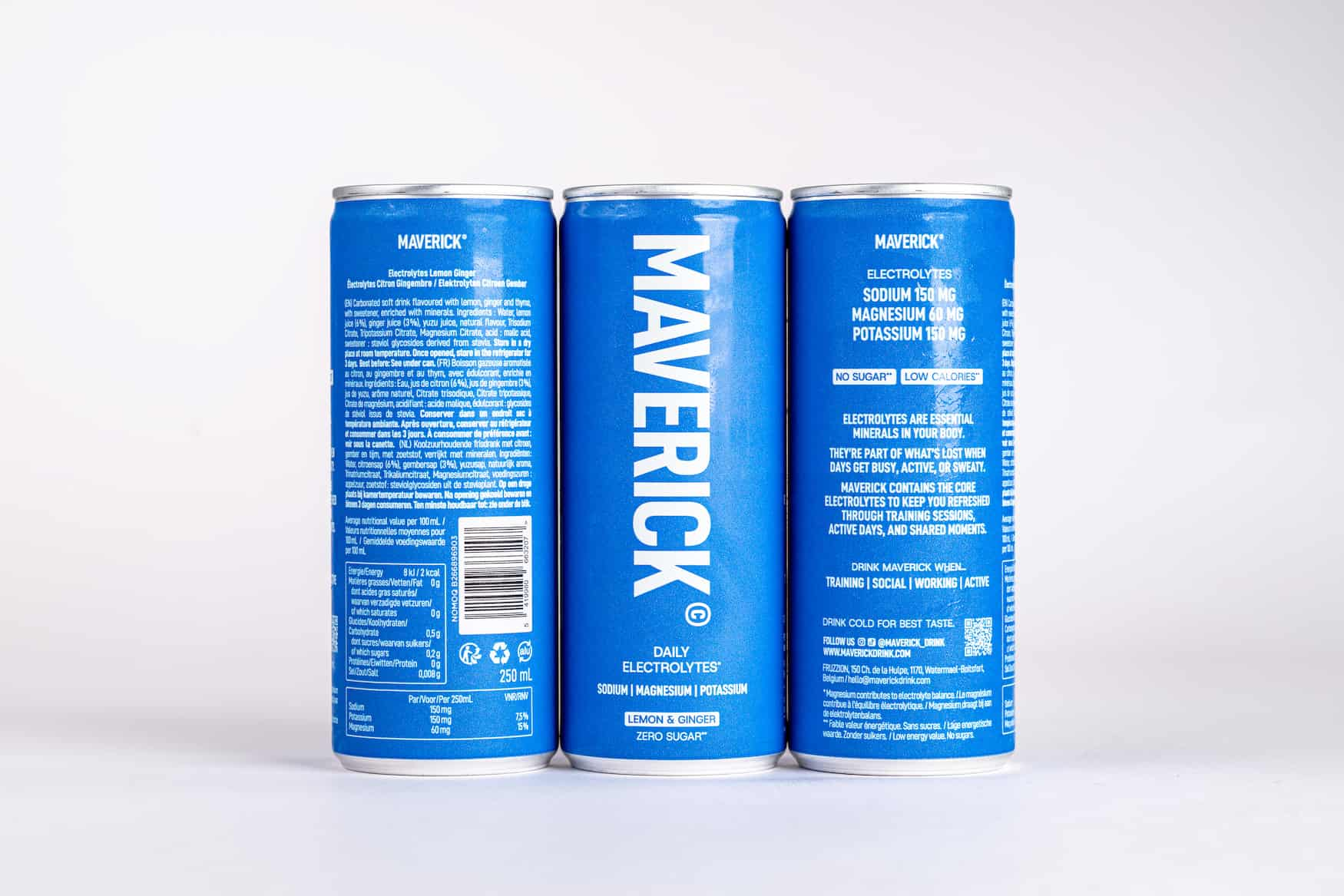
We put magnesium in Maverick on purpose. Each 250 ml can contains 60 mg of magnesium (15% NRV), as magnesium citrate, along with 150 mg of sodium and 150 mg of potassium. Magnesium contributes to the reduction of tiredness and fatigue, to electrolyte balance and to normal muscle function.
That said, a can is a small, steady contribution to your day, not a fix for being exhausted. Food stays the main source, water stays essential, and sleep is still the thing no drink can replace. If you want to know more about what goes into the can and why, have a look at our electrolytes page, or find Maverick in the shop.
Take it one small step at a time
Feeling tired is frustrating, especially when you are trying to stay active. Start with the basics: a bit more sleep, regular meals with seeds, nuts, beans and whole grains, and enough to drink through the day. Give it a few weeks. And if the tiredness sticks around, don't push through it alone: book that doctor's appointment. Your energy is worth looking after properly.