Electrolytes are minerals, like sodium, potassium and magnesium, that carry a tiny electrical charge when they dissolve in your body fluids. That charge is what lets them move water around your body, pass signals along your nerves and help your muscles contract. You lose some every time you sweat, and you top them up mostly through food.
That is the short version. If you have ever stood in a shop looking at a bottle that says "with electrolytes" and wondered what that actually means, the rest of this guide is for you. No chemistry degree needed.
What are electrolytes, exactly?
Take a pinch of salt and stir it into a glass of water. The salt disappears, but it has not gone anywhere: it has split into two charged particles, sodium and chloride. Those charged particles are electrolytes.
Your body works the same way. Your blood, the fluid around your cells and the fluid inside them are all mostly water with minerals dissolved in it. Because those minerals carry a charge, they can do things plain water cannot:
- Steer water. Water tends to follow electrolytes, so they help decide how much fluid stays in your blood, around your cells and inside them.
- Carry signals. Nerve impulses are basically electrolytes moving in and out of cells. That is how your brain tells your legs to keep pedalling.
- Help muscles work. Every muscle contraction, including your heartbeat, relies on minerals like sodium, potassium, calcium and magnesium.
- Keep your internal chemistry stable. Some electrolytes help keep the acidity of your blood in a narrow, healthy range.
Your kidneys do a remarkable job of keeping all of this in balance day to day. Problems usually only show up when you lose a lot in a short time, or when something is off medically.
The main electrolytes and what they do
There are seven you will hear about most. Here is a simple overview of what each one does in general terms, and where you find it in everyday food.
| Electrolyte | What it does (in general) | Everyday food sources |
|---|---|---|
| Sodium | Helps regulate fluid balance and blood volume, needed for nerve signals | Table salt, bread, cheese, olives, soups, most savoury food |
| Potassium | Works with sodium on fluid balance, supports nerve and muscle function | Potatoes, bananas, beans, lentils, spinach, tomatoes, yoghurt |
| Magnesium | Involved in muscle function, energy metabolism and hundreds of processes in the body | Nuts, seeds, whole grains, legumes, leafy greens, dark chocolate |
| Chloride | Partner of sodium in fluid balance, part of stomach acid | Table salt and salty foods |
| Calcium | Builds bones and teeth, needed for muscle contraction and blood clotting | Milk, cheese, yoghurt, fortified plant drinks, tofu, almonds, broccoli |
| Bicarbonate | Helps keep the acidity of your blood in balance | Mostly made by your own body, also found in some mineral waters |
| Phosphate | Part of bones and of the molecules cells use for energy | Dairy, meat, fish, eggs, legumes, whole grains |
For reference, the EU Nutrient Reference Values (NRV) you see on labels are 375 mg a day for magnesium and 2,000 mg a day for potassium. You do not need to count these. A varied plate with vegetables, legumes, whole grains and some dairy or alternatives covers a lot of ground.
How do you lose electrolytes?
Sweat, mostly
Sweat is not just water. It is salty for a reason: the main electrolyte in sweat is sodium, together with chloride. You also lose smaller amounts of potassium, and even less magnesium and calcium.
How much you lose varies a lot from person to person. Some people finish a run with a white, salty crust on their cap or T-shirt; others barely leave a trace. Heat, humidity, how long you move, how hard you go and simply your own body all play a role. A 30 minute walk in spring and a two hour bike ride in July are not the same thing.
Being ill
Vomiting and diarrhoea can drain fluids and electrolytes fast. That is why pharmacies sell oral rehydration solutions, which are designed for that situation. If you or a child are ill and cannot keep fluids down, or it lasts more than a day or two, talk to a doctor or pharmacist.
Other situations
Some medications (such as certain diuretics), a lot of alcohol, and some medical conditions can also affect your electrolyte balance. In those cases the answer is a conversation with your doctor, not a drink from the supermarket.
Where should you get your electrolytes from?
Food first. For most people on most days, regular meals provide all the electrolytes you need. Sodium is rarely missing from a typical diet in Belgium. Potassium and magnesium are where many people could do a bit better, simply by eating more vegetables, beans, nuts and whole grains.
Water for everyday thirst. Water stays the base. EFSA recommends an adequate total water intake of about 2.0 L a day for women and 2.5 L for men, including water from food. If you want to know when plain water is enough and when it is worth adding electrolytes, we explain it in electrolytes vs water.
Drinks when it makes sense. An electrolyte drink earns its place when you sweat more than usual: a long run, a padel match in a warm hall, a summer hike, a day at the beach, a sweaty commute. It is an easy way to take in fluid and some minerals at the same time.
If you are doing something very long, very hot and very sweaty (think two hours or more in the heat, or a marathon), you may need more sodium than a light daily drink gives. In that case, look at higher-sodium products made for endurance, and test what works for you in training.
Common myths about electrolytes
"You need electrolytes every time you drink"
No. Most of the time, water is perfectly fine. Electrolytes are useful when you have lost more than usual, not as a rule for every glass.
"More is always better"
Your body needs balance, not maximum doses. Taking in huge amounts of a single mineral does not make you fitter, and for some people (for example with kidney problems or high blood pressure) it can be a real concern. Ask your doctor if you are unsure.
"Electrolyte drinks are only for athletes"
You do not need a race number to sweat. Gardening on a hot day, moving house, a long cycle to work or a sauna session can all make you lose fluid and salt. The question is how much you sweat, not what you call yourself.
"Sports drinks and electrolyte drinks are the same thing"
Not always. Many classic sports drinks are built around sugar for fuel, with electrolytes added. That can make sense during long, intense efforts. For everyday use, a lot of people prefer something with little or no sugar.
"If you are not thirsty, you are fine"
Thirst is a useful signal and worth listening to. But on hot days or during long efforts, it helps to drink a little before you are parched rather than waiting.
Why Maverick uses sodium, potassium and magnesium
When we built Maverick's electrolyte blend, we kept it simple and chose the three that make the most sense for an everyday drink:
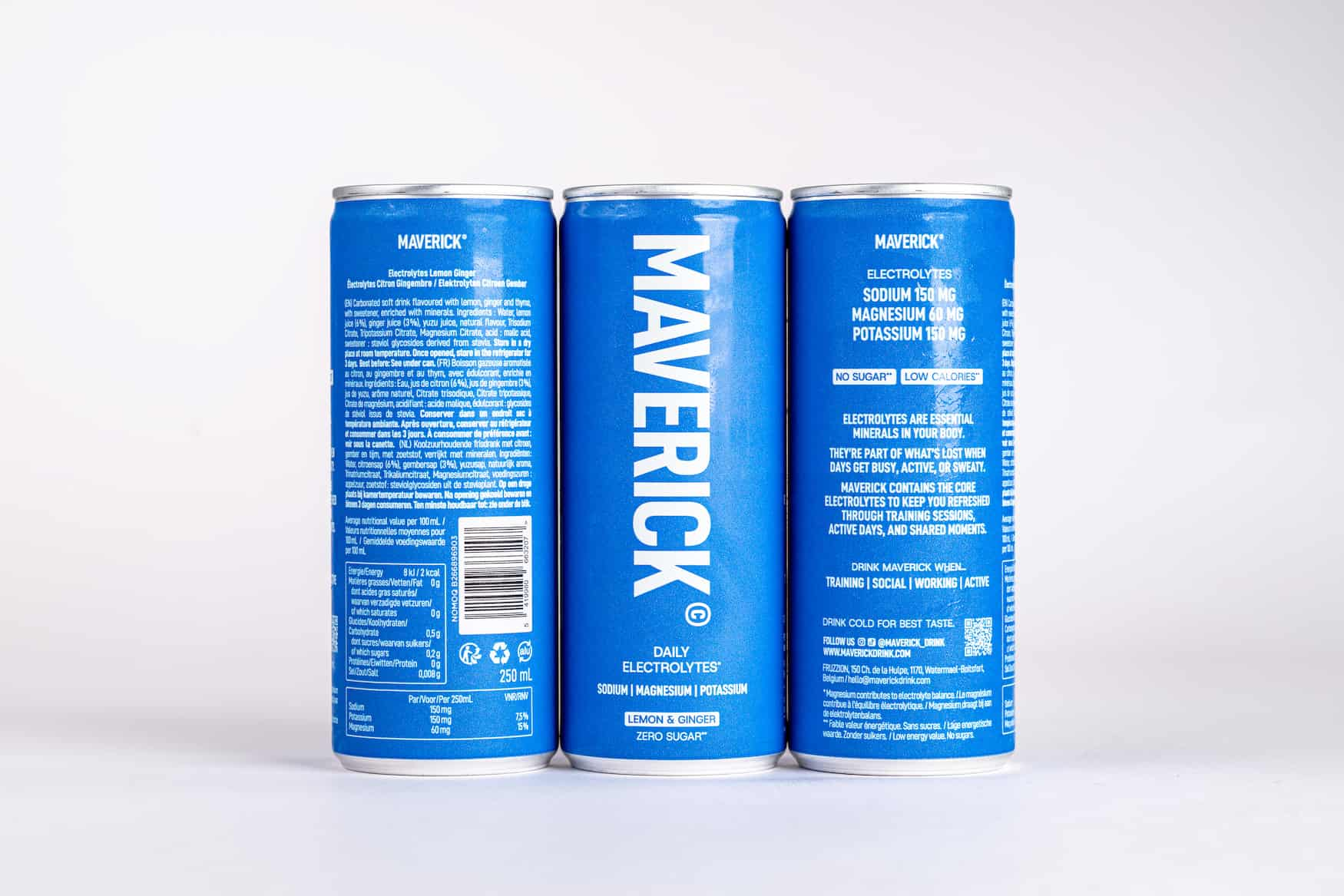
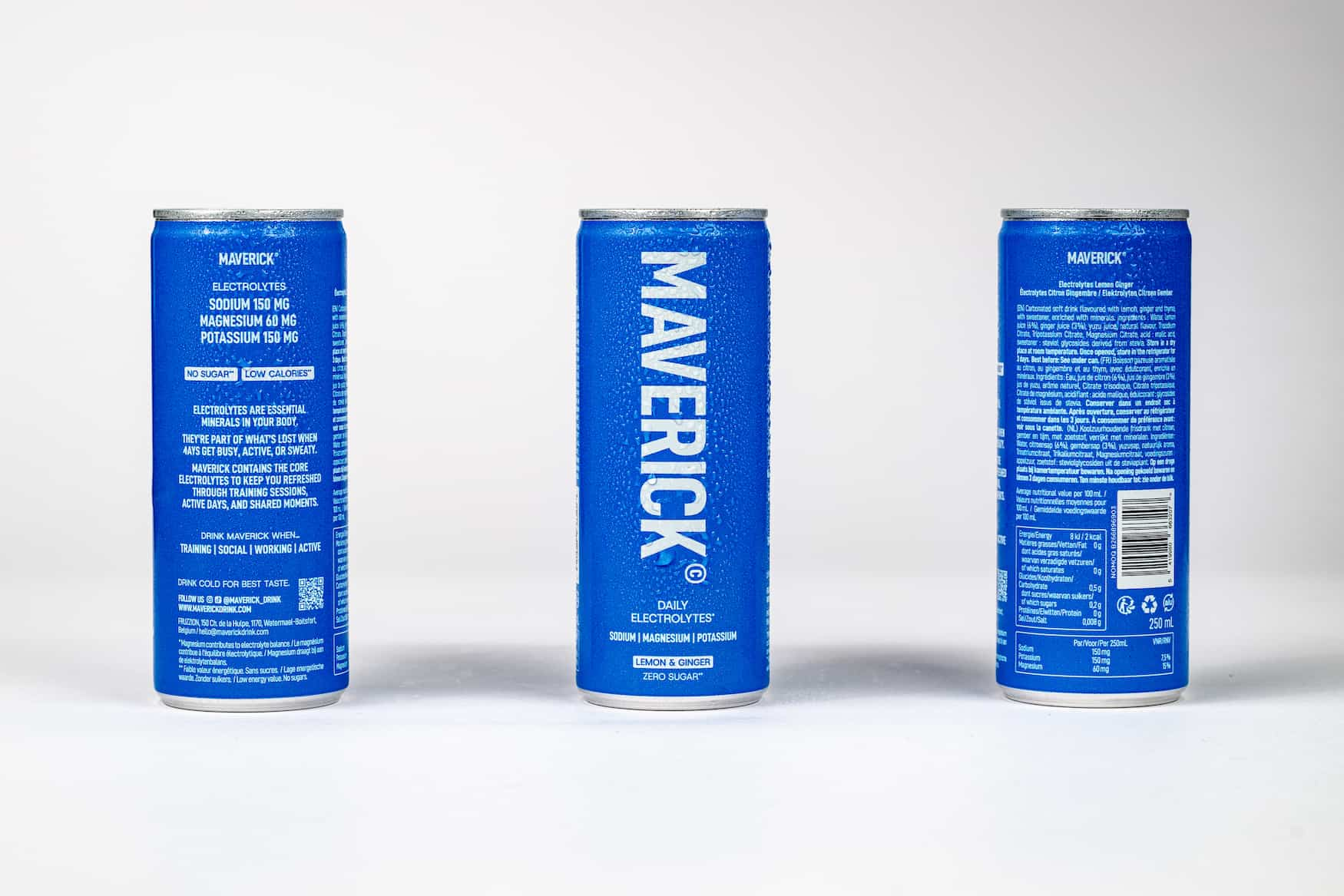
- Sodium (150 mg per can), because it is the main electrolyte you lose in sweat.
- Potassium (150 mg per can, 7.5% NRV), the second one you lose in sweat and one many diets could use more of.
- Magnesium (60 mg per can, 15% NRV), which contributes to electrolyte balance, normal muscle function and the reduction of tiredness and fatigue.
Chloride comes along with the salt you already eat, and calcium is best covered by food, so we left them out. That gives 360 mg of electrolytes in a 250 ml can, lightly sparkling, Lemon & Ginger with yuzu, with 5 kcal and no added sugar.
We call it Daily Electrolytes on purpose. It is a moderate, everyday dose for normal active days, not a high-sodium formula for ultra races. And it sits next to water and good food, not in place of them. If that sounds like your kind of drink, you can find it in our shop.
The bottom line
Electrolytes are not mysterious. They are the minerals that keep water, nerves and muscles working together, and you already get most of them from your plate. Drink water through the day, eat plenty of plants, and reach for something with electrolytes when you have really sweated. Then get back out there, at your own pace.